

Blog
A Masterclass in Hard Sci-Fi That Remembers Why We Look Up – Res Silentis-

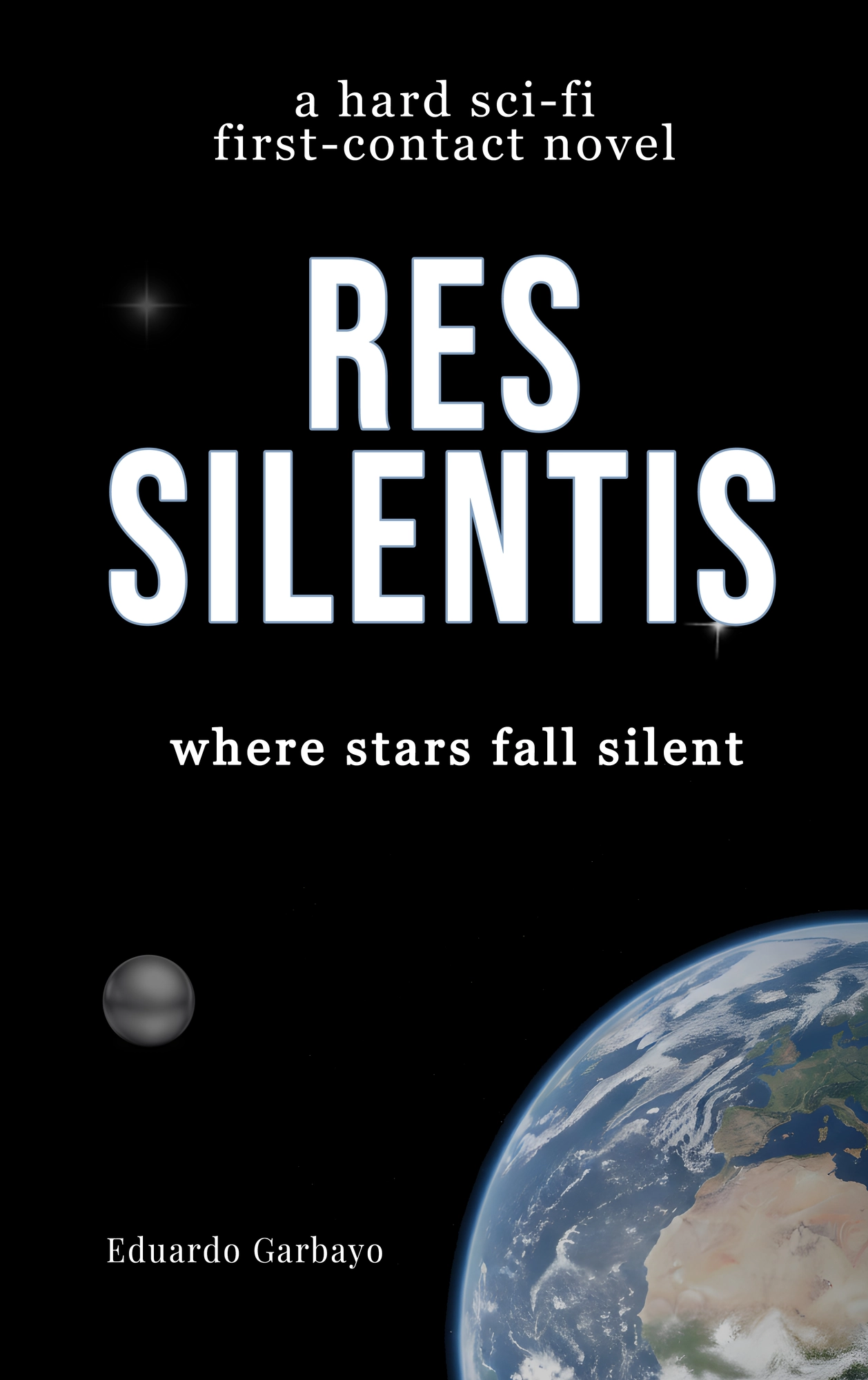
If classic hard science fiction and quiet philosophical depth had a love child raised on orbital mechanics and late-night control-room coffee, it would be Res Silentis – Where Stars Fall Silent by Eduardo Garbayo.
This is the rare novel that treats the vacuum of space with the respect it deserves: cold, precise, and utterly indifferent to human drama—until the moment it isn’t. From the opening pages, Garbayo drops you into the one corner of near-Earth space we’ve actually designated as a junkyard, and from there he builds a story that feels both intimately familiar and profoundly new. It’s first contact told not through explosions or alien fleets, but through telemetry screens, delta-v calculations, international protocols, and the slow, creeping realization that the universe might be watching us more carefully than we ever imagined.
What makes Res Silentis stand out is its perfect balance. The science is rock-solid—every maneuver, every sensor sweep, every line of code feels like it could be pulled from an ESA or NASA briefing. Yet the book never collapses under its own technical weight. Instead, that rigor becomes the poetry. Garbayo has the rare gift of making orbital graveyard mechanics and Planck-length calculations feel strangely beautiful, almost sacred. You don’t just learn how things work in space; you feel the awe of how they work.
At its heart, this is a story about thresholds. The threshold between low orbit and deep space. Between what we can measure and what we can understand. Between the species we are and the species we might still choose to become. Garbayo never shouts the big questions; he lets them emerge naturally from the tension of engineers arguing over fuel margins while the fate of humanity quietly hangs in the balance. The result is a novel that feels like a direct descendant of Clarke and Sagan, yet speaks with unmistakable urgency to our fragmented, hyper-connected 21st century.
The characters are one of the book’s quiet triumphs. These aren’t flawless heroes or cartoon bureaucrats; they’re brilliant, flawed, exhausted people doing their best with the tools they have—people who bicker over coffee, second-guess protocols, and still find the courage to crane their necks toward the unknown. Their humanity grounds the cosmic scale and makes every intellectual breakthrough land with real emotional force.
Stylistically, the prose is clean, confident, and often quietly stunning. Garbayo can shift from the clinical precision of a LIDAR sweep to a single sentence that hits like a philosophical gut punch without ever feeling forced. The pacing is deliberate and masterful—never slow, never rushed—building a sense of mounting wonder and unease that stays with you long after you close the book.
In an era when so much sci-fi chases spectacle, Res Silentis dares to be patient, thoughtful, and technically honest. It reminds us why the golden age of the genre mattered in the first place: because the best stories about the stars are ultimately stories about us. About curiosity. About humility. About whether we’re ready for what’s waiting just beyond the graveyard orbit.
This isn’t just a very good hard sci-fi novel. It’s the kind of book that feels like it could quietly become a classic—shelved between Rendezvous with Rama and The Three-Body Problem, read and reread by generations of engineers, dreamers, and anyone who still gets chills when they look up on a clear night.
If you’ve been craving science fiction that respects both the physics and the philosophy, that delivers wonder without sacrificing intelligence, stop waiting.
Res Silentis is here. And it’s exactly what the genre needed right now.
Essential reading. A modern hard sci-fi masterpiece in the making.